When selecting pipes for industrial applications, one of the most common questions engineers, contractors, and procurement teams ask is: Should I choose carbon steel pipes or stainless steel pipes? Both materials are widely used across industries such as oil & gas, petrochemicals, power generation, marine, construction, and manufacturing. However, each offers unique advantages depending on the operating environment, budget, and performance requirements.
If you’re looking for a reliable Pipe Supplier UAE, choosing the right pipe material is just as important as selecting the right supplier for your project.
Understanding the differences between carbon steel vs stainless steel pipes helps businesses select the right material for long-term reliability, cost efficiency, and operational performance. Factors such as corrosion resistance, mechanical strength, temperature tolerance, maintenance requirements, and application suitability all play an important role in the decision-making process.
At JSS Pipes, we supply a comprehensive range of carbon steel and stainless steel pipes for industrial projects across the UAE and Middle East. This guide explains the major differences between these two materials and helps you determine which option best suits your project.
What Are Carbon Steel Pipes?
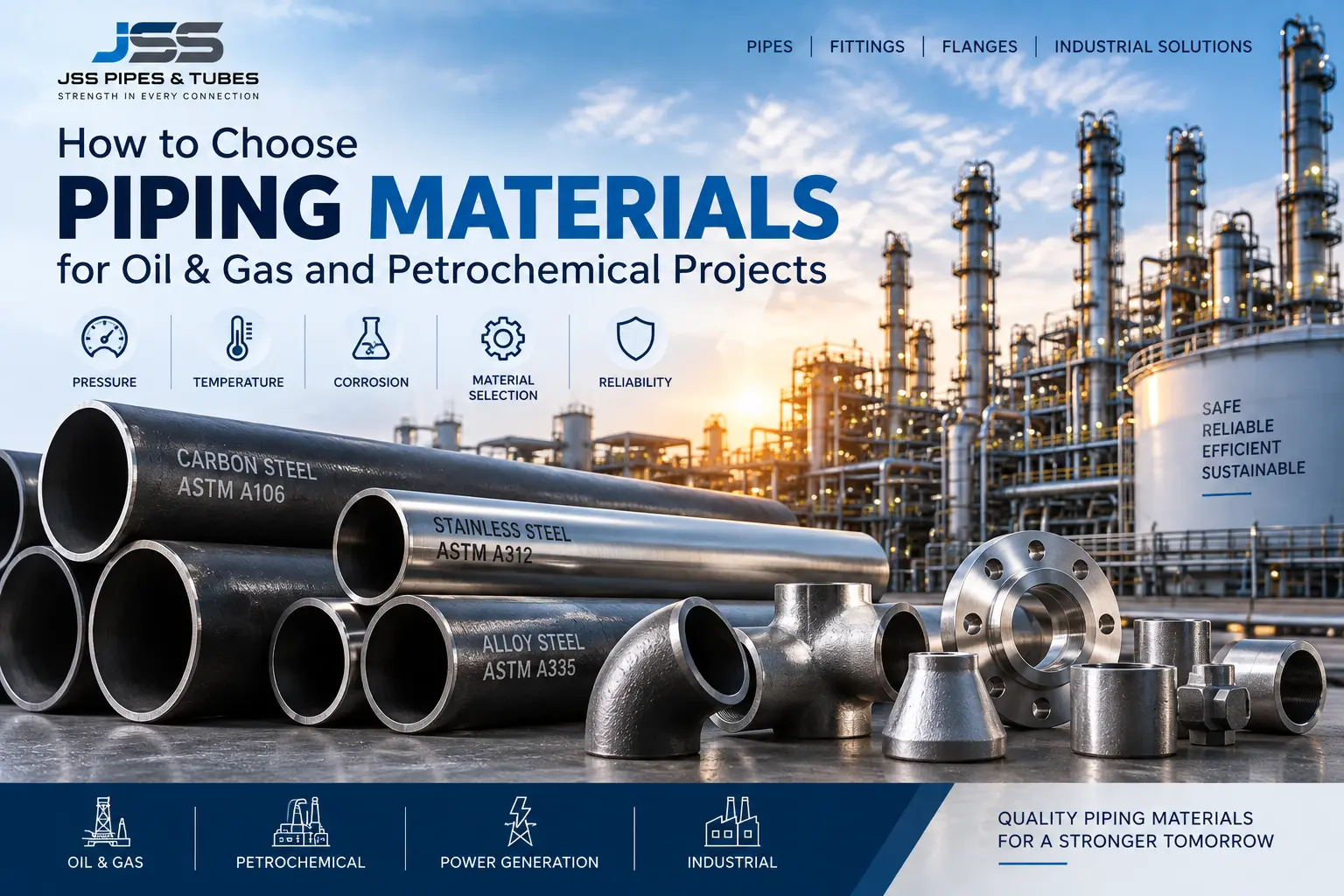
Carbon steel pipes are manufactured primarily from iron and carbon, with small amounts of other alloying elements. They are known for their high strength, excellent pressure-handling capability, and affordability, making them one of the most commonly used piping materials in industrial sectors.
Carbon steel pipes are widely used for transporting oil, gas, steam, water, and other industrial fluids where high mechanical strength is required.
Explore our complete range of Carbon Steel Pipe Suppliers in UAE solutions for industrial, EPC, and oil & gas applications.
Key Features of Carbon Steel Pipes
- High tensile strength
- Excellent pressure resistance
- Cost-effective for large projects
- Suitable for high-temperature applications
- Available in seamless and welded configurations
- Easy to fabricate and weld
What Are Stainless Steel Pipes?
Stainless steel pipes are manufactured using iron combined with chromium and other alloying elements such as nickel and molybdenum. The chromium content forms a protective oxide layer that significantly improves corrosion resistance.
Because of their excellent durability and resistance to rust, stainless steel pipes are widely used in industries where hygiene, corrosion resistance, and long service life are critical.
We also supply premium products through our dedicated Steel Pipe Supplier UAE page for various industrial applications.
Key Features of Stainless Steel Pipes
- Outstanding corrosion resistance
- Attractive surface finish
- Excellent durability
- Hygienic material
- High temperature resistance
- Low maintenance requirements
Carbon Steel vs Stainless Steel Pipes: Key Differences
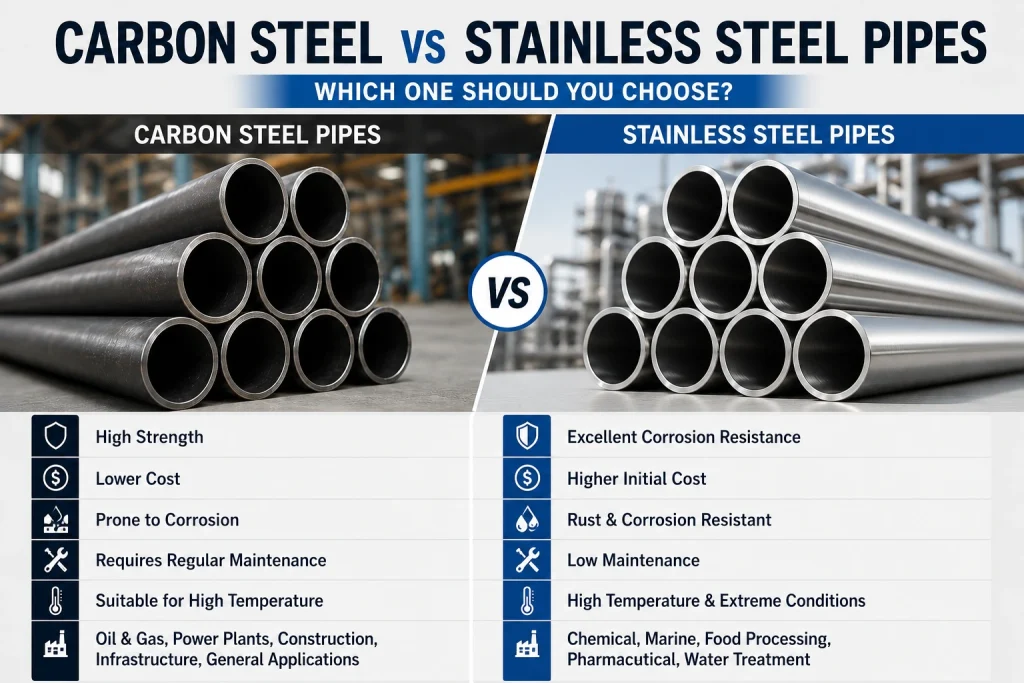
Although both materials are used in industrial piping systems, their properties differ considerably.
Feature | Carbon Steel Pipes | Stainless Steel Pipes |
Corrosion Resistance | Moderate | Excellent |
Strength | Very High | High |
Cost | Lower | Higher |
Maintenance | Requires protective coating | Minimal maintenance |
Rust Resistance | Can rust without protection | Highly resistant to rust |
Appearance | Dark industrial finish | Bright polished finish |
Lifespan | Long with maintenance | Very long |
Typical Applications | Oil & Gas, EPC, Infrastructure | Marine, Chemical, Food, Pharmaceutical |
Strength Comparison
When it comes to mechanical strength, carbon steel pipes generally provide higher tensile strength than standard stainless steel grades. This makes them ideal for high-pressure piping systems, structural applications, and heavy industrial environments.
Stainless steel pipes also offer excellent strength but provide the added benefit of corrosion resistance, making them suitable for environments exposed to moisture, chemicals, or saltwater.
Corrosion Resistance
One of the biggest differences between the two materials is corrosion resistance.
Carbon Steel Pipes
Carbon steel can corrode when exposed to moisture and harsh environmental conditions. Protective coatings, painting, or galvanization are often required to extend service life.
Stainless Steel Pipes
Stainless steel naturally resists corrosion because of its chromium-rich oxide layer. This makes it suitable for:
- Marine environments
- Chemical processing
- Food processing
- Pharmaceutical manufacturing
- Water treatment facilities
For applications involving corrosive fluids or humid environments, stainless steel is often the preferred choice.
Cost Comparison
Budget is another important factor when selecting pipe materials.
Carbon Steel Pipes
Carbon steel pipes are generally more economical and offer excellent value for projects requiring large quantities of piping.
Ideal for:
- Large infrastructure projects
- Industrial plants
- Oil & gas pipelines
- Construction projects
Stainless Steel Pipes
Stainless steel pipes have a higher initial cost but often reduce long-term maintenance and replacement expenses due to their corrosion resistance and durability.
Temperature Performance
Both materials perform well under elevated temperatures, but their applications vary.
Carbon Steel
Suitable for:
- Steam systems
- High-pressure pipelines
- Process industries
- Power generation
Stainless Steel
Suitable for:
- High-temperature chemical processing
- Food manufacturing
- Marine applications
- Cryogenic environments (specific grades)
Maintenance Requirements
Maintenance costs can significantly affect the total lifecycle cost of a piping system.
Carbon Steel
Requires:
- Protective coatings
- Regular inspections
- Corrosion prevention
- Periodic maintenance
Stainless Steel
Requires:
- Minimal maintenance
- Occasional cleaning
- Routine inspections
Its low maintenance requirement often makes stainless steel more economical over the long term despite the higher purchase price.
Applications of Carbon Steel Pipes
Carbon steel pipes are commonly used in:
- Oil & Gas Industry
- EPC Projects
- Refineries
- Power Plants
- Infrastructure Projects
- Construction
- Industrial Manufacturing
- Pipeline Transportation
Complete industrial systems also require high-quality Pipe Fittings Suppliers in UAE for secure and reliable piping connections.
Applications of Stainless Steel Pipes
Stainless steel pipes are widely used in:
- Chemical Plants
- Petrochemical Facilities
- Marine Industry
- Pharmaceutical Industry
- Food & Beverage Processing
- Water Treatment Plants
- Clean Process Systems
- Offshore Installations
When Should You Choose Carbon Steel Pipes?
Carbon steel pipes are the better option when:
- High mechanical strength is required.
- The operating environment is not highly corrosive.
- Budget is a primary concern.
- Large industrial projects require cost-effective piping.
- Protective coatings can be applied.
When Should You Choose Stainless Steel Pipes?
Stainless steel pipes are recommended when:
- Corrosion resistance is essential.
- The system operates in marine or chemical environments.
- Hygiene is important.
- Low maintenance is preferred.
- Long service life is required.
Which Pipe Material Is Better?
There is no single answer because the right choice depends on your project requirements.
Choose carbon steel pipes if your priority is strength, affordability, and high-pressure performance.
Choose stainless steel pipes if your project demands corrosion resistance, durability, and minimal maintenance.
Many industrial facilities use both materials within different sections of the same piping system depending on operational requirements.
Why Choose JSS Pipes?
JSS Pipes supplies premium-quality carbon steel and stainless steel pipes for industrial projects across the UAE and Middle East.
Our product range includes:
- Carbon Steel Pipes
- Stainless Steel Pipes
- Pipe Fittings
- SS Fittings
- Carbon Steel Fittings
- Flanges
- Forged Fittings
- Weldolets
- Industrial Piping Components
We support industries including oil & gas, EPC, petrochemical, marine, power generation, and infrastructure with reliable products, technical expertise, and timely delivery.
Conclusion
Choosing between carbon steel vs stainless steel pipes depends on your operating environment, budget, maintenance expectations, and project specifications. Carbon steel remains an excellent choice for strength and affordability, while stainless steel provides superior corrosion resistance and long-term durability.
Before selecting a piping material, consider factors such as fluid type, temperature, pressure, environmental conditions, and lifecycle costs. Working with an experienced supplier ensures you receive the right products for your specific application.
Whether you need carbon steel pipes, stainless steel pipes, fittings, or complete industrial piping solutions, JSS Pipes is committed to delivering quality products that meet international standards and project requirements.
Frequently Asked Questions
Q1. What is the main difference between carbon steel and stainless steel pipes?
Ans – Carbon steel pipes offer higher strength and lower cost, while stainless steel pipes provide superior corrosion resistance and require less maintenance.
Q2. Which pipe material lasts longer?
Ans – Stainless steel pipes generally have a longer lifespan because they naturally resist corrosion and rust.
Q3. Are carbon steel pipes suitable for outdoor applications?
Ans – Yes, but they usually require protective coatings or painting to prevent corrosion in outdoor environments.
Q4. Where are stainless steel pipes commonly used?
Ans – They are commonly used in marine, chemical, pharmaceutical, food processing, water treatment, and petrochemical industries.
Q5. Which pipe is more cost-effective?
Ans – Carbon steel pipes have a lower initial cost, whereas stainless steel pipes often provide better long-term value due to reduced maintenance.
Q6. Can carbon steel and stainless steel pipes be used in the same project?
Ans – Yes. Many industrial projects use both materials depending on the operating conditions and application requirements.
Q7. Does JSS Pipes supply both carbon steel and stainless steel pipes?
Ans – Yes. JSS Pipes supplies carbon steel pipes, stainless steel pipes, fittings, flanges, weldolets, and complete industrial piping solutions across the UAE.
Q8. How do I choose the right pipe material?
Ans – The right choice depends on factors such as corrosion exposure, operating temperature, pressure, maintenance requirements, budget, and industry standards. Consulting an experienced supplier like JSS Pipes can help ensure the best selection for your project.