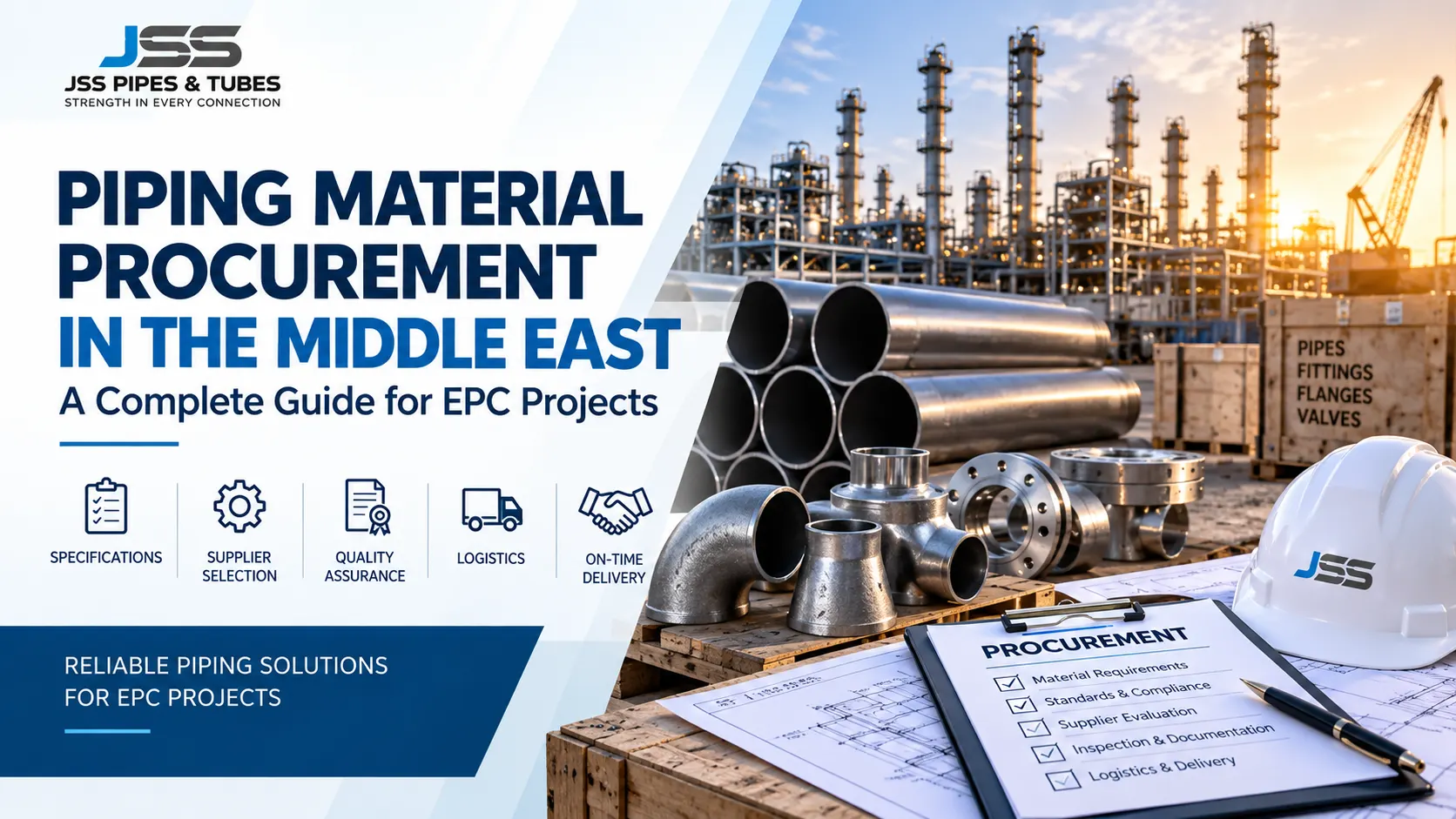
Different Types of Pipe Flanges and Their Industrial Applications
Flanges provide an essential integral link in industrial piping systems. They create a secure and accessible piped connection. Oil and gas pipe suppliers are significant to high-performing flanges to minimize wasted time or leaking dollars. Knowing flanges will benefit you and your organisation, whether used in petrochemical, marine, or water treatment. Understanding the different flanges, with quality manufacturing and sourcing, selecting a flange type is not a challenge. Trusted pipe flange suppliers support industries that rely on strong, long-lasting, and flexible services above high pressure and high temperature.
What is a Pipe Flange?
A pipe flange is a round fitting that is flat in shape and used to connect pipes, valves, pumps, or other equipment into a piping system. These flanges are bolted with gaskets to guarantee a proper seal while providing easy inspection, modification, or cleaning access.
Oil and gas pipe suppliers offer flanges in different sizes, ratings, and materials to suit the specific pipeline condition and ensure safe operations. Flanges are standard equipment that help assemble and disassemble complex systems for servicing or inspection.
Common Types of Pipe Flanges
Industrial applications require different types of flanges due to pressure, temperature, and installation needs. Some of the most used types include:
- Weld Neck Flanges: A long, tapered hub used for high-pressure systems. Has stress resistance and offers a smooth flow transition.
- Slip-On Flanges: Slip right over the pipe and weld; used for low-pressure operations.
- Blind Flanges: Used to stop off a pipeline or valve. Used for inspection and maintenance points.
- Threaded Flanges: A screw on design; no welding required. Suitable for hazardous or flammable areas.
- Socket Weld Flanges: The pipe sits in a socket and is welded. Provides good, smooth bore and a strong sales ability for small diameter piping.
- Lap Joint Flanges: Best suited with a stub end; great for systems that require frequent assembly and disassembly.
- Orifice Flanges: These hold distinct orifices made for measuring fluid flow.
Reliable pipe flange suppliers usually stock these types, so you can get them with appropriate dimensions and pressure ratings.
Flange Face Types
The face of a flange determines how it seals with its mating surface. Here are the most common types:
- Raised Face (RF): The most widely used. The raised area around the bore concentrates pressure on the gasket, improving the seal.
- Flat Face (FF): The entire face is flat. Often used with cast iron flanges and in low-pressure piping.
- Ring-Type Joint (RTJ): Grooved surface that holds a metal gasket. Ideal for high-pressure and high-temperature environments.
- Tongue and Groove (T&G): Interlocking surfaces that ensure alignment and prevent gasket displacement.
Choosing the correct face type is as critical as selecting the flange itself. Expert oil and gas pipe suppliers provide guidance to help ensure proper fit and sealing.
Industrial Applications of Pipe Flanges
Pipe flanges are everywhere in industries where fluid or gas is transferred under pressure or heat. Their main applications include:
- Oil & Gas Industry: Used on high-pressure offshore pipelines, oil rigs, and during refining processes. Here, accuracy and durability are critical.
- Chemical & Petrochemical Plants: Highly resistant to corrosion, chemical reactions, and high heat. Stainless steel flanges are the most common material.
- Water Treatment Facilities: Simplified maintenance and cleaning processes. Use slip-on and lap joint flanges.
- Power Plants: These are found in steam systems and boiler feedwater lines where pressure tolerance is critical.
- Marine & Shipbuilding: Corrosion resistance is vital; flanges are often made from brass or stainless steel.
Reliable pipe flange suppliers ensure that industries receive the right product for their operational environment. Their accuracy and delivery timelines directly impact plant efficiency and safety.
Choosing the Right Pipe Flange
Not sure which flange to use? Here are a few pointers:
- Know Your Pressure and Temperature Ratings: Flanges must match the system’s operating limits.
- Match Material to Media: Use corrosion-resistant alloys for chemicals; carbon steel for general use.
- Consider Maintenance Requirements: Lap joints or threaded flanges are better for systems that require frequent dismantling.
- Check Size and Standards: The dimensions of the flanges must satisfy ANSI, ASME, or DIN specifications.
- Choose Trusted Sources: Reputable oil and gas pipe suppliers offer mill test certifications, good machining, and prompt service.
Partnering with certified pipe flange suppliers helps ensure safety and regulatory compliance in all industrial systems.
Reliable Flanges Begin with Reliable Suppliers
Pipe flanges are not just connectors but essential elements that maintain complex systems’ safety, operation, and lifespan. Understanding the types and making the right choices in the face and material are necessary to ensure a leak-proof, low-maintenance function. Industries can operate without interruptions with proper assistance from reputable pipe flange suppliers. From high-pressure oil pipelines to simple waterlines, sourcing quality products from verified oil and gas pipe suppliers will ensure a better future and a more reliable experience. When every part counts, flanges make the difference.
Frequently Asked Questions
1. What are the main types of pipe flanges used in industrial applications?
Weld neck, slip-on, blind, socket weld, threaded, lap joint, orifice flanges are commonly used in industrial settings for strength, ease of installation, and maintenance access.
2. Which flange type is best for high-pressure applications?
Weld neck and ring-type joint (RTJ) flanges perform best under high pressure due to their strong welds, sealing features, and excellent stress-handling capabilities in demanding conditions.
3. What materials are pipe flanges typically made from?
Pipe flanges are made from carbon steel, stainless steel, alloy steel, cast iron, and sometimes plastic or brass. The choice depends on the pipeline’s temperature, pressure, and fluid or gas type.
4. What standards are followed for manufacturing pipe flanges?
Flanges are manufactured according to international standards like ANSI, ASME, BS, DIN, and EN to ensure compatibility, safety, and reliability across global industrial systems.
5. How do I choose the right pipe flange for my application?
Assess your pressure, temperature, media type, and maintenance frequency. Then match the flange type, face, and material with your system requirements for optimal performance.
6. What is the difference between raised face (RF) and ring-type joint (RTJ) flanges?
RF flanges use flat gaskets for standard pressure systems. RTJ flanges use metal rings for superior sealing in high-pressure or high-temperature environments like refineries and offshore rigs.
7. Can different flanges be used in the same pipeline system?
Yes, but they must match size, pressure class, and bolt configuration. Compatibility between flange types ensures proper alignment, sealing, and safety throughout the system.