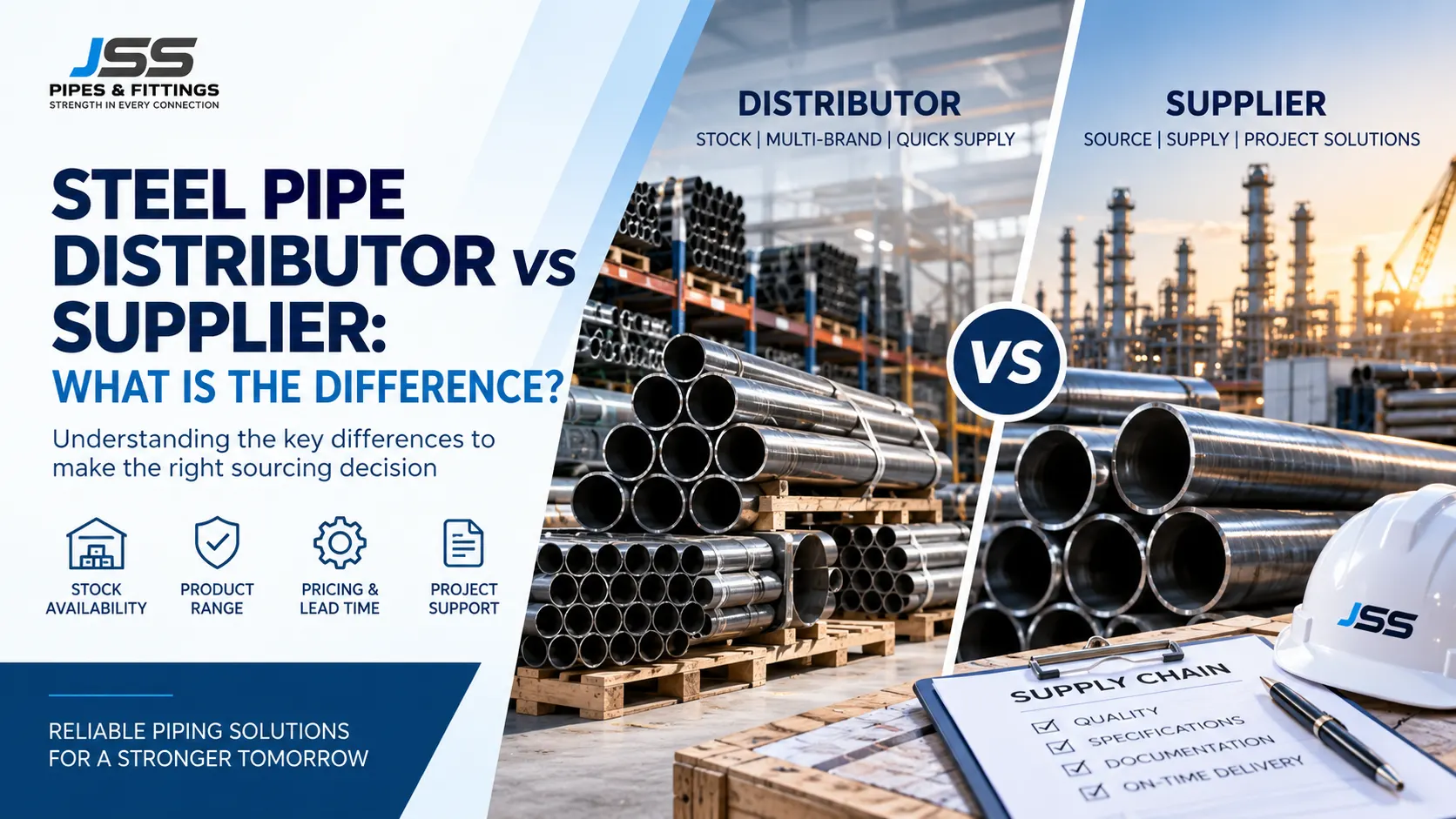
When sourcing steel pipes for industrial, construction, oil and gas, petrochemical, or EPC projects, buyers often come across the terms steel pipe distributor and steel pipe supplier. These terms are sometimes used interchangeably, but they can describe different roles within the piping supply chain.
A steel pipe distributor may purchase products from manufacturers or other supply channels, maintain inventory, and distribute materials to contractors, fabricators, traders, and industrial customers. A steel pipe supplier is a broader term that can describe a company that provides steel pipes through different sourcing and supply models.
Understanding the difference can help procurement teams evaluate stock availability, product range, sourcing options, lead times, documentation, and project support before placing an order.
In this guide, we explain the difference between a steel pipe distributor vs supplier, how each operates, and what buyers should consider when sourcing steel pipes for industrial and project requirements
What Is a Steel Pipe Distributor?
A steel pipe distributor is a business that purchases steel pipes from manufacturers, mills, stock sources, or other approved supply channels and distributes them to customers.
Distributors may maintain inventory across different:
- Pipe sizes
- Wall thicknesses
- Material grades
- Specifications
- Manufacturing types
- Product categories
Because distributors can work with multiple sources, they may be able to provide customers with different product options depending on availability and project requirements.
A distributor may supply steel pipes to:
- EPC contractors
- Construction companies
- Fabricators
- Mechanical contractors
- Oil and gas companies
- Petrochemical projects
- Industrial plants
- Trading companies
- Maintenance contractors
What Does a Steel Pipe Distributor Do?
Typical distributor activities can include:
- Sourcing steel pipes
- Maintaining stock
- Managing warehouse inventory
- Supplying different sizes and grades
- Preparing quotations
- Supporting bulk requirements
- Coordinating transportation
- Providing material documentation
- Supporting project-specific procurement
For buyers who require readily available material, distributor inventory can be an important consideration.
What Is a Steel Pipe Supplier?
A steel pipe supplier is a broader term for a company that provides steel pipes to customers.
A supplier may operate as:
- A distributor
- A stockist
- A manufacturer
- An authorized representative
- A sourcing company
- A combination of these models
Therefore, the word supplier does not necessarily describe a single type of business model.
For example, one supplier may have its own warehouse stock, while another may source materials from manufacturers after receiving a project requirement.
The supplier’s role is generally to provide the required material according to the customer’s specifications, quantity, quality requirements, and delivery schedule.
Steel Pipe Distributor vs Supplier: Key Differences
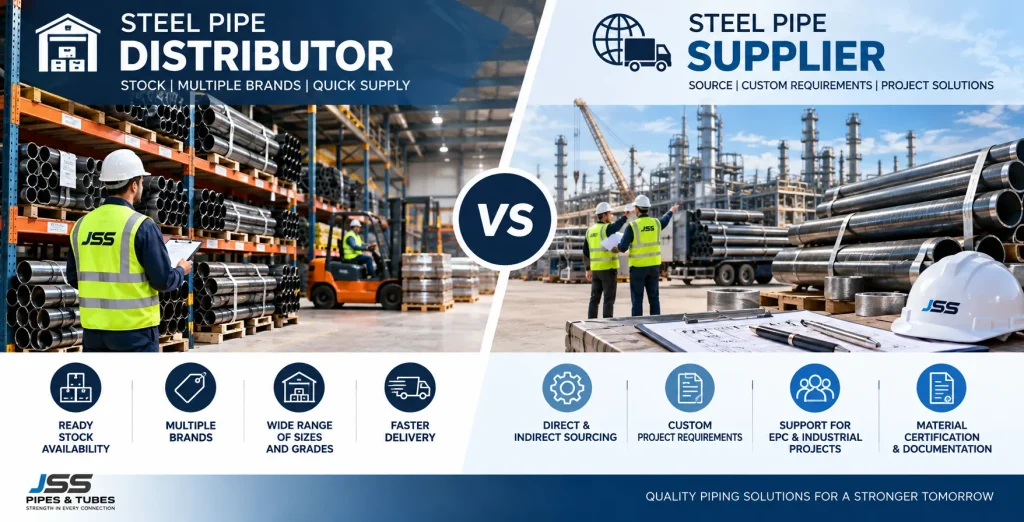
The main difference is that distributor generally describes a specific position within the supply chain, while supplier is a broader term describing a company that provides the required products.
However, there can be significant overlap between the two.
Factor | Steel Pipe Distributor | Steel Pipe Supplier |
Business Model | Typically purchases and distributes products | Broad term covering different supply models |
Inventory | May maintain warehouse stock | May or may not maintain stock |
Product Sources | Often works with multiple manufacturers or sources | May source directly or through distribution channels |
Product Range | Can offer multiple sizes, grades and specifications | Depends on sourcing network |
Bulk Orders | Common | Common |
Project Supply | Can support EPC and industrial requirements | Can support EPC and industrial requirements |
Lead Time | Can be shorter for stocked materials | Depends on material availability and sourcing |
Procurement Support | Often provides sourcing and distribution support | Depends on supplier’s business model |
Documentation | Provided according to material and project requirements | Depends on manufacturer/source and project requirements |
The terminology can vary between markets, so buyers should focus on the supplier’s actual capabilities, inventory, sourcing network, documentation, and delivery performance rather than relying only on the title used by the company.
How Steel Pipe Distributors Work
A typical steel pipe distributor operates between manufacturers and end customers or project buyers.
The basic process can look like this:
Manufacturer / Mill → Distributor → Contractor / EPC / Industrial Buyer
The distributor may purchase or source materials in advance and maintain inventory for commonly requested products.
When a customer submits an enquiry, the distributor checks:
- Required pipe size
- Material grade
- Wall thickness or schedule
- Manufacturing type
- Applicable specification
- Required quantity
- Available stock
- Required delivery date
The distributor can then prepare a quotation based on available materials and project requirements.
For stocked materials, this model may allow faster fulfillment compared with materials that need to be manufactured or specially sourced.
How Steel Pipe Suppliers Work
A steel pipe supplier can operate through several different sourcing models.
For example:
Manufacturer → Supplier → Customer
or:
Manufacturer → Distributor → Supplier → Customer
or:
Multiple Sources → Supplier → EPC Project
The exact structure depends on the supplier.
Some suppliers focus on readily available stock, while others specialize in project-based sourcing and procurement.
For this reason, buyers should ask the supplier whether the required material is:
- Available from stock
- Available from an associated warehouse
- Available through a manufacturer
- Available through another approved source
- Subject to manufacturing lead time
This information can have a direct impact on project scheduling.
Steel Pipe Distributor vs Stockist: Are They the Same?
The terms distributor and stockist are closely related, but they are not always identical.
A stockist generally emphasizes holding inventory, while a distributor may focus more broadly on sourcing, stocking, and distributing products.
A company can therefore operate as both a distributor and a stockist.
For example, a steel pipe distributor may maintain warehouse stock of commonly requested pipe sizes while sourcing less common grades or sizes against specific project requirements.
For buyers, the more important question is whether the company can provide the required material within the required timeframe and specification.
Which Option Is Suitable for Bulk Steel Pipe Requirements?
For bulk steel pipe requirements, the most important factors are not simply whether the company is called a distributor or supplier.
Procurement teams should evaluate:
- Total required quantity
- Material grade
- Pipe dimensions
- Availability
- Lead time
- Required standards
- Inspection requirements
- Documentation
- Delivery location
- Packaging requirements
- Commercial terms
A distributor with sufficient inventory may be able to fulfill a large requirement from available stock.
On the other hand, a supplier with strong manufacturer relationships may be able to source large quantities directly according to project specifications.
Therefore, the appropriate sourcing model depends on the actual project requirement.
Steel Pipe Distributor vs Supplier for EPC Projects
EPC projects often have detailed technical specifications and strict procurement schedules.
Steel pipe procurement may need to meet requirements related to:
- Material grade
- Pipe size
- Schedule
- Manufacturing process
- Applicable standards
- Testing
- Inspection
- Material certification
- Traceability
- Delivery schedule
For EPC procurement, the buyer should evaluate whether the distributor or supplier can support these requirements.
Technical Compliance
The supplier should be able to understand and quote against the project’s technical requirements.
Material Availability
Stock availability can be particularly important when materials are required within a short project timeframe.
Documentation
Project procurement may require Material Test Certificates and other documentation associated with the supplied materials.
Traceability
Where required, material identification and documentation should be traceable to the supplied products.
Delivery
The supplier should be able to confirm realistic lead times and coordinate delivery according to project requirements.
What Should You Check Before Buying Steel Pipes?
Before placing an order, buyers should confirm the following information.
1. Material Grade
Confirm the required grade and ensure the supplier’s quotation matches the project specification.
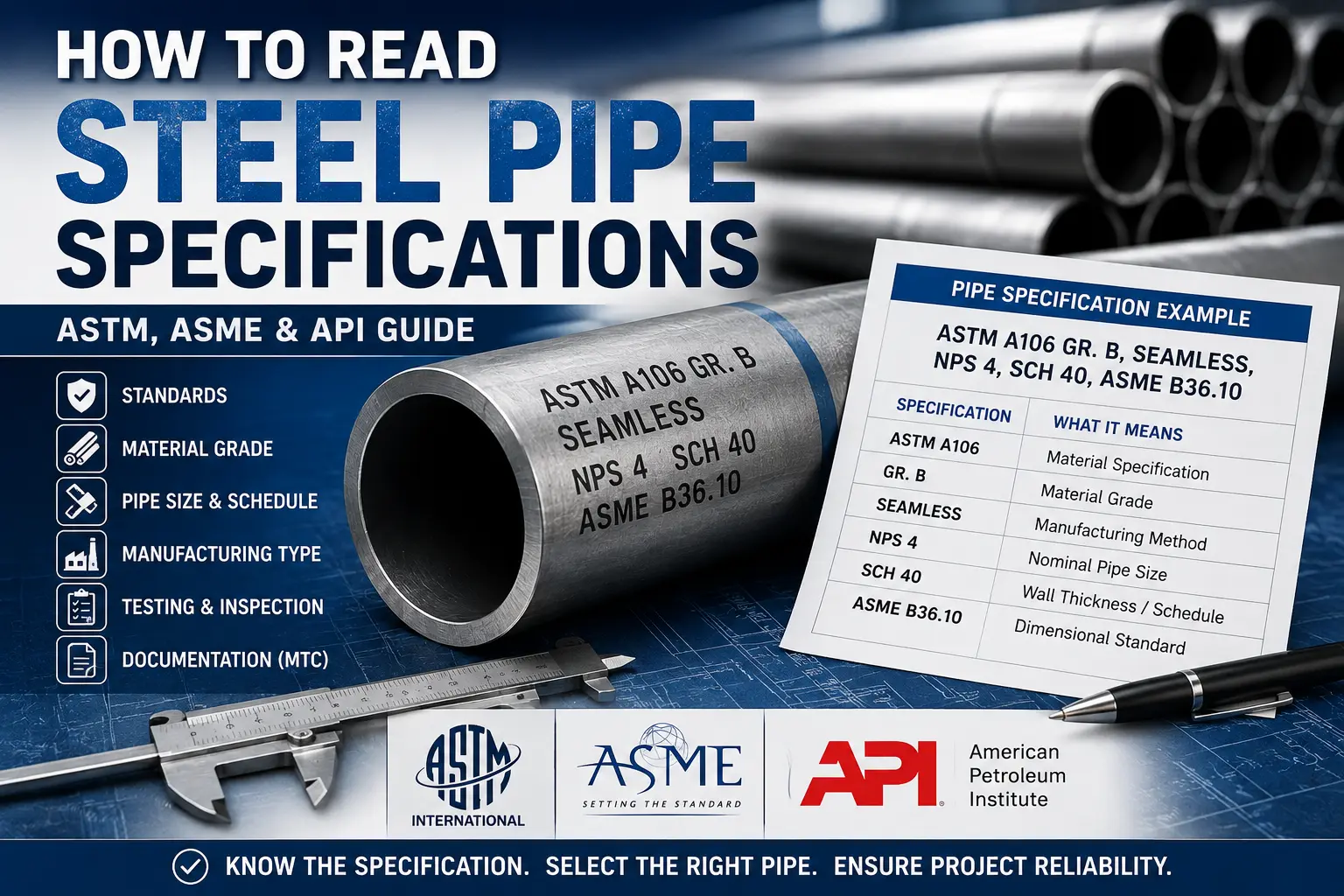
Before placing an order, procurement teams should understand the applicable steel pipe specifications, including material grade, dimensions, manufacturing requirements, testing, and relevant industry standards.
2. Pipe Size
Verify nominal pipe size, outside diameter where applicable, and required dimensions.
3. Wall Thickness
Confirm the required schedule or wall thickness.
4. Manufacturing Type
Determine whether the project requires seamless, welded, or another specified manufacturing type.
5. Applicable Standards
Check the applicable ASTM, ASME, API, EN, or project-specific requirements.
6. Quantity
Ensure the quoted quantity matches the material take-off or purchase requirement.
7. Availability
Ask whether the material is available from stock or requires sourcing/manufacturing.
8. Lead Time
Confirm the expected dispatch and delivery schedule before placing the purchase order.
9. Documentation
Confirm which certificates and inspection documents will be supplied.
10. Delivery Requirements
Confirm delivery location, packaging, transportation, and any site-specific requirements.
Steel Pipe Grades, Sizes and Standards
Steel pipe procurement can involve different material grades and specifications depending on the application.
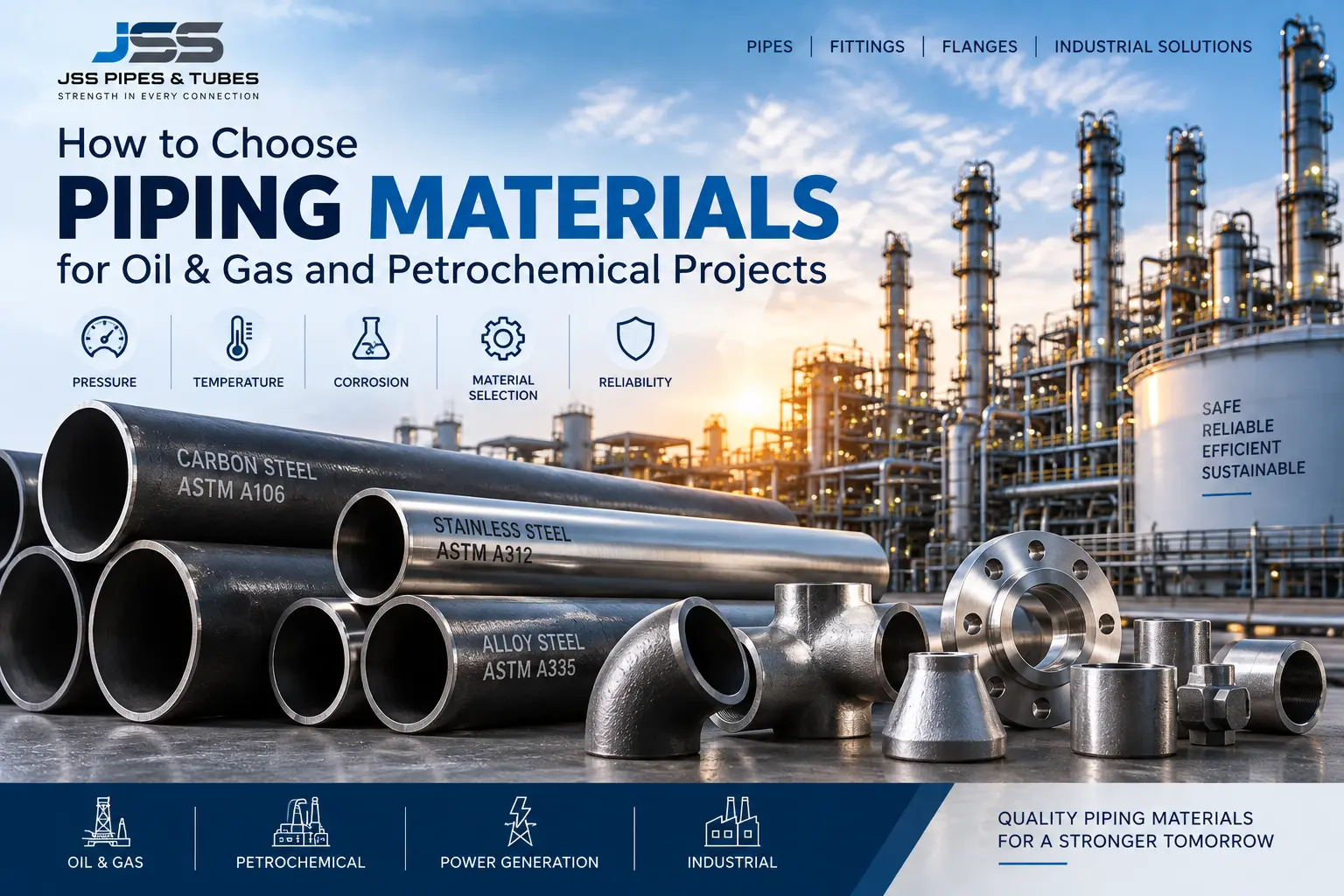
Common requirements may include carbon steel, stainless steel, alloy steel, and other specialized materials.
Buyers should also verify the required nominal size, nominal bore, and outside diameter using a pipe size chart before confirming an order
The applicable specification may define:
- Chemical composition
- Mechanical properties
- Dimensions
- Manufacturing requirements
- Testing
- Inspection
- Marking
- Certification
For this reason, buyers should avoid selecting a pipe based solely on its general material description.
For projects requiring carbon steel materials, buyers can review the available carbon steel pipes based on grade, size, schedule, manufacturing type, and project requirements.
How Availability and Lead Time Differ
Availability is one of the practical differences buyers may encounter when comparing distributors and suppliers.
A distributor with warehouse inventory may be able to offer commonly requested steel pipes immediately or within a short fulfillment period.
A supplier sourcing a special material from a manufacturer may require additional time for:
- Production
- Quality testing
- Inspection
- Certification
- Packing
- Transportation
However, stock availability should always be confirmed against the exact grade, size, quantity, and specification required.
A supplier saying that “steel pipes are available” does not necessarily mean that the exact material required for the project is immediately available.
Pricing and Procurement Considerations
Price is an important factor in steel pipe procurement, but it should not be considered independently from technical compliance and delivery.
Two quotations can have different prices because they may differ in:
- Material grade
- Manufacturing source
- Quantity
- Certification
- Testing
- Inspection
- Delivery terms
- Lead time
- Packaging
- Payment conditions
Before comparing prices, procurement teams should confirm that the quotations are technically comparable.
A lower price may not provide the same procurement value if the material has a longer lead time or does not include required documentation.
Documentation and Material Traceability
Documentation is particularly important for industrial and EPC projects.
Depending on project requirements, buyers may need documents such as:
- Material Test Certificates
- Certificates of conformity
- Inspection reports
- Test reports
- Packing lists
- Certificates of origin
- Manufacturer documentation
Material identification should also be checked against the supplied documentation wherever traceability is required.
Procurement teams should establish documentation requirements before issuing the purchase order so that the supplier understands what needs to be provided with the materials.
How to Choose a Steel Pipe Distributor or Supplier in UAE
When sourcing steel pipes for industrial or EPC requirements, working with an experienced steel pipe distributor in UAE can help buyers access suitable products, sourcing support, documentation, and project-based supply solutions.
Consider the following:
Product Availability
Can the company supply the required sizes, grades, schedules, and manufacturing types?
Stock and Sourcing Capability
Does it maintain local inventory, or can it source materials from reliable manufacturers and supply channels?
Technical Understanding
Can the company correctly interpret project specifications and material requirements?
Documentation
Can it provide the required material certificates and supporting documentation?
Project Support
Can it handle bulk quantities and project-based requirements?
Delivery
Can it meet the required delivery schedule and location?
Industry Experience
Does it have experience supplying materials for industrial, construction, oil and gas, petrochemical, or EPC requirements?
For UAE projects, buyers may also consider the supplier’s local logistics capabilities and ability to coordinate material delivery efficiently.
For project-specific requirements, an experienced steel pipe supplier in UAE can help procurement teams source pipes according to the required grade, size, schedule, applicable standards, and documentation requirements.
Steel Pipe Procurement Checklist
Before confirming a steel pipe order, use this checklist:
Technical Requirements
- Material grade confirmed
- Pipe size confirmed
- Wall thickness/schedule confirmed
- Seamless or welded requirement confirmed
- Applicable standard confirmed
- Quantity confirmed
Supplier Evaluation
- Stock availability checked
- Sourcing capability verified
- Lead time confirmed
- Product range reviewed
- Relevant project experience considered
Quality & Documentation
- MTC requirements confirmed
- Testing requirements confirmed
- Inspection requirements confirmed
- Traceability requirements confirmed
- Documentation requirements included in the order
Delivery & Commercial
- Price compared on a like-for-like basis
- Payment terms reviewed
- Delivery location confirmed
- Delivery schedule confirmed
- Packaging requirements confirmed
Distributor vs Supplier: What Should Buyers Focus On?
The terms distributor and supplier should not be the only factors used to evaluate a steel pipe source.
Instead, buyers should ask:
Can the company supply the right material, in the right quantity, with the required documentation, within the required timeframe?
That question is more useful than simply asking whether a company is a distributor or supplier.
For standard stocked materials, inventory and immediate availability may be important.
For large EPC projects, sourcing capability, technical compliance, documentation, inspection coordination, and delivery planning may become equally important.
Conclusion
The difference between a steel pipe distributor vs supplier is mainly related to the role each company plays within the supply chain. A distributor generally focuses on sourcing, stocking, and distributing products, while supplier is a broader term that can include distributors, stockists, manufacturers, and other sourcing businesses.
For industrial and EPC projects, however, the most important consideration is not the title used by the company.
Buyers should evaluate material availability, technical compliance, product range, quality documentation, traceability, lead time, sourcing capability, pricing, and delivery support.
By evaluating these factors before placing an order, procurement teams can select a steel pipe source that aligns with their specific project requirements and purchasing schedule.
Frequently Asked Questions
Q1. What is the difference between a steel pipe distributor and supplier?
Ans – A steel pipe distributor typically purchases and distributes steel pipes from manufacturers or other supply channels, often maintaining inventory. Supplier is a broader term that can include distributors, stockists, manufacturers, and other companies that provide steel pipes to customers.
Q2. Is a steel pipe distributor the same as a supplier?
Ans – Not always. A distributor can be a type of supplier, but the term supplier covers a wider range of business models and sourcing arrangements.
Q3. What does a steel pipe distributor do?
Ans – A steel pipe distributor may source, stock, manage, and distribute steel pipes to contractors, EPC companies, fabricators, industrial customers, and other buyers.
Q4. What does a steel pipe supplier do?
Ans – A steel pipe supplier provides steel pipes according to customer requirements and may source products from manufacturers, distributors, stock locations, or other supply channels.
Q5. Is a steel pipe distributor suitable for bulk orders?
Ans – Yes, distributors can handle bulk requirements, particularly when sufficient inventory or sourcing capacity is available. Buyers should confirm quantity, grade, size, availability, and delivery requirements before ordering.
Q6. What is the difference between a steel pipe distributor and stockist?
Ans – A stockist primarily emphasizes maintaining inventory, while a distributor may perform a broader role involving sourcing, stocking, and distributing products. A company can operate as both.
Q7. Do steel pipe distributors keep products in stock?
Ans – Many distributors maintain inventory, but stock availability varies by company and product. Buyers should confirm the exact grade, size, quantity, and specification required.
Q8. Can a steel pipe supplier provide custom project requirements?
Ans – Depending on its sourcing network and capabilities, a supplier may be able to provide project-specific materials. The required specifications, quantities, documentation, and delivery schedule should be confirmed before ordering.
Q9. What should I check before choosing a steel pipe distributor in UAE?
Ans – Check product availability, material grades, sizes, sourcing capability, documentation, traceability, lead time, delivery capability, technical understanding, and experience with relevant industrial or project requirements.
Q10. Are steel pipe distributors suitable for EPC projects?
Ans – They can support EPC projects when they can meet the project’s technical, quality, documentation, quantity, inspection, and delivery requirements.
Q11. How do steel pipe distributors affect delivery lead times?
Ans – If the required material is already available in stock, a distributor may be able to offer shorter fulfillment times. Materials that require manufacturing or special sourcing can have longer lead times.
Q12. What documents should I request when buying steel pipes?
Ans – Depending on project requirements, buyers may need Material Test Certificates, certificates of conformity, inspection reports, test reports, packing lists, certificates of origin, and other specified documentation.