Pipes work like lifelines in the oil and gas business. They transport crude oil between nations, supply cities with water, and maintain chemical plants. The pipes you select determine the overall cost, safety, and functionality. Due to their effectiveness and low breakdown rate, welded pipes are widely used. Oil companies, gas companies, builders, and factories often use welded pipes because they have several benefits that make them worth buying.
What Are Welded Pipes?
Welded pipes are made by taking a flat piece of steel and rolling it into a round tube shape. Then, workers weld the seam to make it one solid piece. There are different ways to do this welding. Some use electricity, others use special underwater welding methods. Unlike seamless pipes (which are made by pushing steel through a hole), welded pipes need good welding to be strong.
Main Advantages of Welded Pipes
Cost-Effectiveness
The biggest reason to choose welded pipes is that they’re affordable. Making them require less energy and steel than other types, so they cost less to produce. For big projects, like building a whole oil refinery, this cost difference adds up to huge savings.
Expert Tip: Many buyers only look at the first price. But welded pipes often save more money over time because new welding methods mean they need less fixing later on.
Availability in Large Sizes
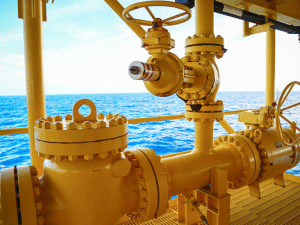
Unlike seamless pipes, welded pipes can be more than 100 inches wide. They are therefore ideal for city pipe networks, water systems, and offshore oil platforms.
Consistency and Uniformity
The walls of the welded pipes are uniformly thick. This indicates that engineers are fully aware of their work process. For instance, identical pipes can make the difference between safety and costly issues on offshore oil rigs where precise pressure is required.
Ease of Fabrication and Installation
Welded pipes are lighter and easier to change to fit your needs. They can be fixed right at the job site without much trouble. Contractors like to use them for projects that need to be done quickly, such as plumbing in tall buildings or when fixing petrochemical plants.
Welded Pipes vs. Seamless Pipes: Quick Comparison
Seamless Pipes:
- How they are made: Made from a single piece of metal. After heating up the metal, a hole is punched through it to create a tube.
- Strength: As there are no joined seams to break. These pipes are stronger than welded ones, especially when subjected to high pressure.
- Cost: More costly to manufacture.
- Applications: Ideal for crucial tasks where failure is unavoidable, such as high-pressure steam systems, oil and gas pipelines, and hydraulic equipment.
Welded Pipes:
- How Welded Pipes Are Made: Made by rolling a flat piece of metal into a pipe and joining the edges with welding.
- Strength: Can be extremely strong, but if done incorrectly, the welded line may be the weakest area.
- Cost: Less expensive to produce.
- Uses: Excellent for construction frames, water pipes, and tasks requiring less than extreme pressure.
Which type you pick depends on what you need it for, how much pressure it needs to handle, and how much money you want to spend.
Real Example: While welded pipes are used for cooling water lines in oil refineries, seamless pipes may be utilized for high-pressure areas.
Where Welded Pipes Are Used
- Oil and Gas: Pipeline systems, refinery pipes, and ocean platforms
- Construction: Building plumbing, structural support, and fire safety systems
- Water Supply: City water pipes and sewer systems
- Energy: Power plants and heating systems
Why Welded Pipes Are Preferred in Large-Scale Projects
Big projects need things they can count on, cost savings, and speed. Welded pipes give you all three. Think about expanding a gas terminal: the project needs thousands of feet of pipe, often really wide ones, and it has to be done on time. A welded pipe supplier can deliver lots of pipes and make sure they’re all good quality – something that’s hard to do with seamless pipes.
Industry Insight: The move toward clean energy is making this even more important. As hydrogen and carbon capture projects grow, demand for big welded pipes will increase – making them a smart choice for future energy projects.
Factors to Consider While Buying Welded Pipes
- Supplier Trust: Always work with a welded pipe supplier that follows international rules like ASTM, API, or ISO.
- Steel Type: Pick the right steel for your job – rust resistance is very important for ocean oil projects.
- Welding Method: Make sure you know if the supplier uses ERW, LSAW, or SSAW welding, as each has different benefits.
- Testing: Non-destructive testing makes sure the welds are good and will last a long time.
Welded Pipes Are a Smart Choice
Welded pipes offer the right mix of good cost, availability, and strength. Their use in oil pipelines, construction frames, and energy projects shows how important they are. With better welding technology, they now work almost as well as seamless pipes for many jobs while being much easier to get in large quantities.
For people making decisions in oil, gas, construction, and water supply, welded pipes are still a reliable choice for the future. To learn about buying options and technical details, check out products and services on the JSS Pipes company website.
Common Questions Answered
Can welded pipes handle high pressure safely?
Yes, but only if they’re built for that much pressure and made the right way, following safety rules. For really high-pressure jobs, solid pipes (seamless) might still work better.
How do I pick between ERW, LSAW, and SSAW pipes?
ERW works best for smaller pipes, LSAW for high-pressure pipe lines, and SSAW for long pipes that go far distances.
Do welded pipes need more care than solid pipes?
Not really. Today’s welding is of high quality, and pipes get special coatings to stop rust. This often makes welded pipes last just as long or longer in some situations.
What businesses use welded pipes the most?
Oil and gas companies, water systems, building projects, and power plants use welded pipes every day.