Understanding Pipe Schedules and Choosing the Right One for Industrial Applications
Selecting the correct pipe schedule is one of the most important decisions when designing an industrial piping system. Whether you’re working on an oil & gas project, petrochemical plant, power station, or water treatment facility, the pipe schedule directly affects the pipe’s pressure-handling capability, durability, and overall performance.
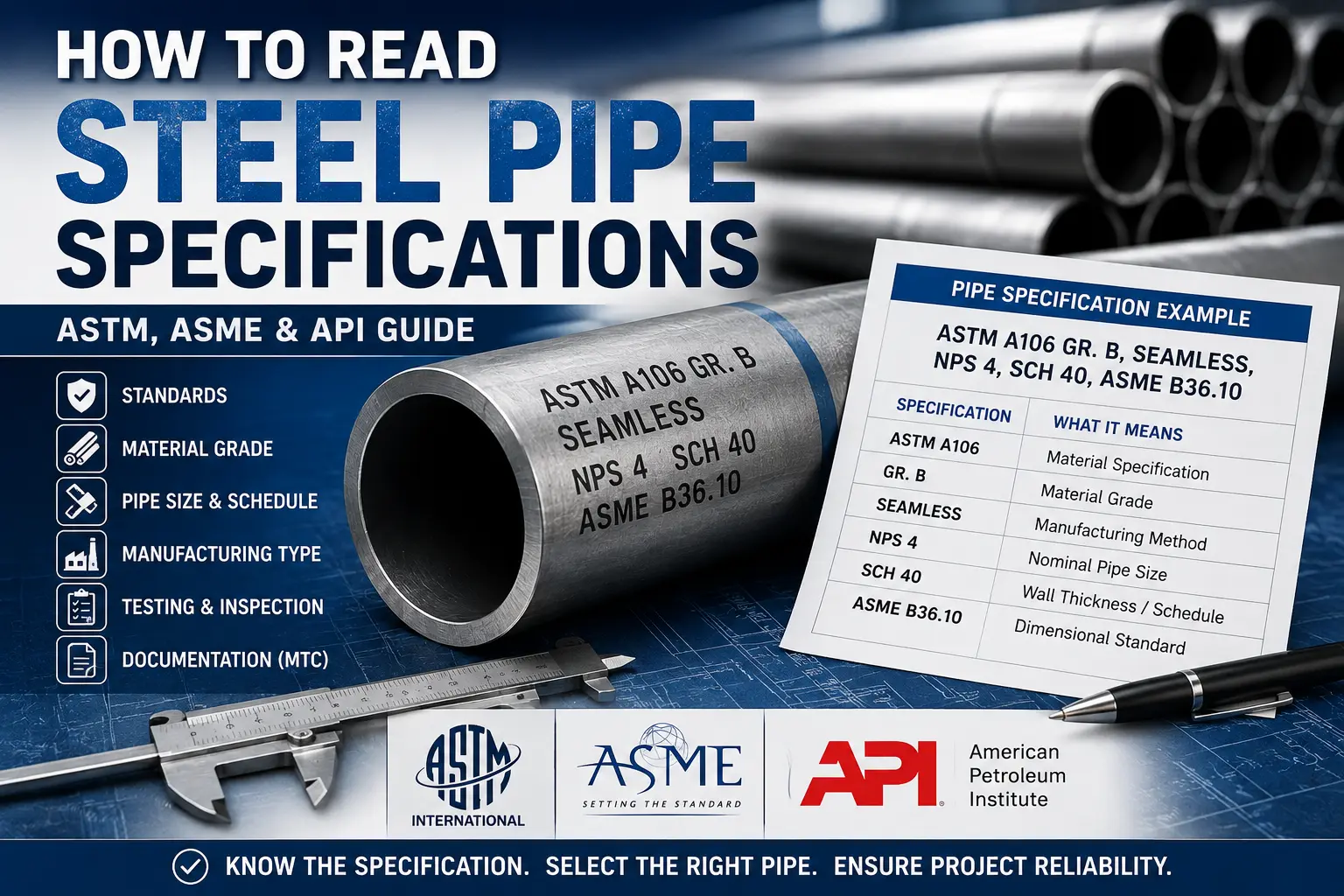
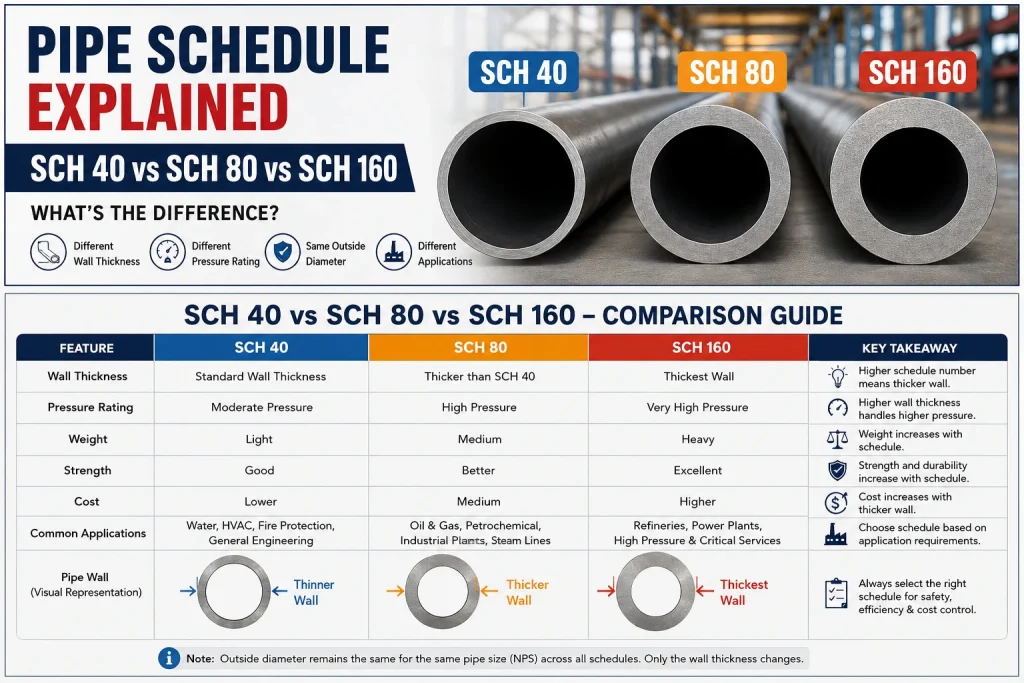
Many people mistakenly believe that a higher pipe schedule refers to a larger pipe diameter. In reality, pipe schedule indicates the wall thickness of a pipe, while the outside diameter (OD) remains the same for a given nominal pipe size (NPS). As the schedule number increases, the pipe wall becomes thicker, allowing it to withstand higher internal pressures.
In this guide, we’ll explain what pipe schedule means, compare SCH 40, SCH 80, and SCH 160, discuss their applications, and help you choose the right schedule for your industrial piping requirements.
What Is Pipe Schedule?
Pipe schedule is a standardized designation that indicates the wall thickness of a pipe. A higher schedule number means a thicker pipe wall and greater pressure-handling capability. For example, SCH 40 is commonly used for general industrial applications, SCH 80 is suitable for higher-pressure systems, and SCH 160 is designed for critical services involving extremely high pressure and temperature. Although the wall thickness changes, the outside diameter of the pipe remains the same for the same nominal pipe size (NPS).
For example, a 6-inch SCH 40 pipe and a 6-inch SCH 80 pipe have the same outside diameter, but the SCH 80 pipe has a thicker wall and a smaller internal diameter because of the additional material.
This standardization allows different pipe schedules to be used with the same fittings and flanges while meeting varying pressure requirements.
Understanding pipe schedules is essential for designing safe, efficient, and code-compliant industrial piping systems.
What Does SCH Mean in Pipes?
The abbreviation SCH stands for Schedule, which represents the standardized wall thickness of a pipe.
Contrary to a common misconception, the schedule number is not a direct measurement in millimeters or inches. Instead, it is a designation defined by industry standards to classify pipe wall thickness.
Some of the most commonly used pipe schedules include:
- SCH 10
- SCH 20
- SCH 40
- SCH 60
- SCH 80
- SCH 120
- SCH 160
- XXS (Double Extra Strong)
Each schedule is designed for different pressure ratings and industrial applications.
Why Pipe Schedule Is Important
Choosing the correct pipe schedule is critical because it directly impacts the safety, efficiency, and service life of a piping system.
The pipe schedule determines:
- Pressure-handling capacity
- Resistance to internal stress
- Mechanical strength
- Weight of the piping system
- Flow characteristics
- Installation cost
- Long-term maintenance requirements
Selecting a schedule that is too thin can increase the risk of pipe failure, while choosing a schedule that is unnecessarily thick can significantly increase project costs and overall system weight.
For industrial projects requiring reliable piping solutions, working with an experienced Steel Pipe Supplier UAE helps ensure the selected pipe schedule matches the project’s pressure class, operating conditions, and applicable engineering standards.
How Pipe Schedule Affects Wall Thickness
One of the easiest ways to understand pipe schedules is to compare them based on wall thickness.
As the schedule number increases:
- Wall thickness increases.
- Internal diameter decreases.
- Pressure rating increases.
- Pipe weight increases.
- Material cost increases.
However, the outside diameter remains unchanged for the same nominal pipe size.
This standardization simplifies piping design because engineers can increase pressure capacity by selecting a higher schedule without changing the overall pipe routing or compatible fittings.
SCH 40 vs SCH 80 vs SCH 160
SCH 40, SCH 80, and SCH 160 are among the most commonly specified schedules in industrial piping systems. While they share the same outside diameter for a given pipe size, they differ significantly in wall thickness, pressure capability, and intended application.
SCH 40 Pipes
SCH 40 is considered the standard wall thickness for many industrial and commercial applications. It offers a good balance between strength, weight, and cost, making it suitable for systems operating under moderate pressure.
Common Applications
- Water supply systems
- HVAC installations
- Fire protection systems
- General manufacturing
- Commercial construction
- Low to medium pressure process piping
Advantages
- Economical
- Easy to fabricate
- Lightweight compared to higher schedules
- Widely available
SCH 80 Pipes
SCH 80 pipes have thicker walls than SCH 40, allowing them to handle significantly higher internal pressures.
These pipes are commonly selected where durability and pressure resistance are more important than reducing weight or material costs.
Common Applications
- Oil & Gas facilities
- Petrochemical plants
- Chemical processing
- High-pressure water systems
- Steam piping
- Industrial processing plants
Advantages
- Higher pressure rating
- Better resistance to mechanical stress
- Longer service life under demanding conditions
- Improved safety for critical applications
SCH 160 Pipes
SCH 160 pipes are designed for extremely demanding industrial environments where both pressure and temperature are exceptionally high.
Because of their very thick walls, these pipes are heavier, stronger, and capable of operating safely under severe service conditions.
Common Applications
- Refineries
- Offshore platforms
- Power generation plants
- High-pressure process piping
- Critical chemical processing
- Heavy industrial applications
Advantages
- Excellent pressure resistance
- Superior mechanical strength
- Suitable for extreme operating environments
- Enhanced durability in critical services
SCH 40 vs SCH 80 vs SCH 160 Comparison
Feature | SCH 40 | SCH 80 | SCH 160 |
Wall Thickness | Standard | Thick | Extra Thick |
Internal Diameter | Largest | Smaller | Smallest |
Pressure Capacity | Moderate | High | Very High |
Weight | Light | Medium | Heavy |
Material Cost | Lower | Moderate | Higher |
Typical Applications | Water, HVAC, Construction | Oil & Gas, Petrochemical | Refineries, Power Plants |
Service Conditions | Moderate | High Pressure | Extreme Pressure & Temperature |
Which Pipe Schedule Should You Choose?
The right schedule depends on your project’s operating pressure, temperature, fluid type, and industry requirements—not simply on cost or availability.
While SCH 40 is ideal for general-purpose piping, SCH 80 is commonly selected for high-pressure industrial systems. SCH 160 is reserved for critical applications where maximum strength and pressure resistance are essential.
Choosing the correct schedule during the design stage improves safety, reduces maintenance costs, and extends the service life of the piping system.
Pipe Schedule Chart (SCH 40 vs SCH 80 vs SCH 160)
While the exact wall thickness varies depending on the Nominal Pipe Size (NPS), the relationship between common schedules remains consistent.
Nominal Pipe Size (NPS) | SCH 40 | SCH 80 | SCH 160 |
1 Inch | Standard Wall | Thick Wall | Extra Thick Wall |
2 Inch | Standard Wall | Thick Wall | Extra Thick Wall |
4 Inch | Standard Wall | Thick Wall | Extra Thick Wall |
6 Inch | Standard Wall | Thick Wall | Extra Thick Wall |
8 Inch | Standard Wall | Thick Wall | Extra Thick Wall |
Note: As the schedule number increases, the wall thickness increases, while the outside diameter remains unchanged for the same NPS.
How to Choose the Right Pipe Schedule
Choosing the correct pipe schedule involves much more than selecting the thickest available option. Engineers evaluate operating conditions, applicable standards, project budget, and long-term performance before making a decision.
Operating Pressure
Pressure is one of the most important factors when selecting a pipe schedule.
Higher operating pressures require thicker pipe walls to safely withstand internal forces without deformation or failure.
- Low to moderate pressure → SCH 40
- High pressure → SCH 80
- Very high pressure → SCH 160
Operating Temperature
As temperature increases, the strength of steel decreases. High-temperature applications often require thicker pipe walls to maintain structural integrity and comply with design codes.
Industries such as power generation and petrochemical processing frequently specify SCH 80 or SCH 160 for elevated temperature services.
Type of Fluid
The fluid flowing through the pipeline also affects pipe selection.
Different media may require different wall thicknesses depending on:
- Corrosiveness
- Abrasiveness
- Flow velocity
- Pressure fluctuations
- Chemical compatibility
For aggressive industrial environments, sourcing quality materials from experienced Carbon Steel Pipe Suppliers UAE helps improve reliability and long-term performance.
Industry Standards
Pipe schedules should always comply with internationally recognized standards such as:
- ASME
- ASTM
- ANSI
- API
Following these standards helps ensure compatibility, safety, and regulatory compliance across industrial projects.
Project Budget
Although thicker schedules offer higher strength, they also increase:
- Material costs
- Transportation costs
- Welding time
- Installation costs
Selecting the appropriate schedule rather than simply choosing the thickest pipe results in a more efficient and cost-effective design.
Common Applications of Different Pipe Schedules
Each schedule is designed to perform under different operating conditions.
SCH 40 Applications
SCH 40 is commonly used in:
- Commercial buildings
- Water supply systems
- Fire protection systems
- HVAC installations
- Irrigation systems
- Manufacturing facilities
SCH 80 Applications
SCH 80 is preferred for:
- Oil & gas pipelines
- Petrochemical facilities
- Steam systems
- High-pressure water lines
- Chemical processing plants
- Industrial manufacturing
SCH 160 Applications
SCH 160 is generally specified for:
- Refineries
- Offshore platforms
- Power plants
- High-pressure process piping
- Critical industrial services
- Heavy engineering projects
Working with an experienced Steel Pipe Supplier UAE ensures the selected pipe schedule aligns with project specifications, operating conditions, and applicable engineering standards.
Common Mistakes When Selecting Pipe Schedule
Selecting an unsuitable pipe schedule can increase maintenance costs, reduce system reliability, and create unnecessary safety risks.
Avoid these common mistakes:
Choosing Based Only on Cost
Lower-cost pipes may not provide adequate pressure resistance for demanding applications.
Ignoring Operating Pressure
Always verify the system’s design pressure before selecting a schedule.
Overlooking Temperature Conditions
High temperatures reduce material strength and should always be considered during pipe selection.
Assuming Higher Schedule Is Always Better
While thicker pipes are stronger, they also increase weight and project costs. The objective is to select the right schedule, not necessarily the highest one.
Ignoring Applicable Standards
Pipe schedules should always comply with project specifications and recognized industry standards to ensure safe operation.
Best Practices for Pipe Schedule Selection
Following a structured approach helps improve safety, reduce maintenance, and optimize project costs.
Recommended best practices include:
- Evaluate operating pressure and temperature.
- Consider the type of fluid being transported.
- Select materials suitable for the application.
- Follow ASME, ASTM, and API standards.
- Verify compatibility with valves, fittings, and flanges.
- Consult experienced engineering and procurement professionals before finalizing specifications.
Partnering with a trusted pipe supplier in UAE also helps ensure access to certified piping products suitable for industrial, EPC, and infrastructure projects.
Conclusion
Pipe schedule is a critical factor in determining the strength, pressure capacity, and durability of an industrial piping system. Although SCH 40, SCH 80, and SCH 160 share the same outside diameter for a given pipe size, their wall thickness and performance characteristics vary significantly.
SCH 40 is suitable for general-purpose applications, SCH 80 provides additional strength for high-pressure systems, and SCH 160 is designed for the most demanding industrial environments where maximum pressure resistance is required.
By understanding the differences between these schedules and considering factors such as operating pressure, temperature, fluid type, and industry standards, engineers and procurement teams can select the most suitable piping solution while improving safety, efficiency, and long-term reliability.
Frequently Asked Questions
Q1. What is pipe schedule?
Ans – Pipe schedule is a standardized designation that indicates the wall thickness of a pipe. A higher schedule number means a thicker wall and a greater ability to withstand internal pressure.
Q2. What does SCH mean in steel pipes?
Ans – SCH stands for Schedule, which defines the wall thickness of a pipe according to standardized dimensions rather than its outside diameter.
Q3. What is the difference between SCH 40 and SCH 80?
Ans – SCH 80 has a thicker wall than SCH 40, allowing it to handle higher pressure while maintaining the same outside diameter.
Q4. Is SCH 80 stronger than SCH 40?
Ans – Yes. SCH 80 pipes have thicker walls, making them stronger and more suitable for high-pressure industrial applications.
Q5. When should SCH 160 pipes be used?
Ans – SCH 160 pipes are typically used in refineries, power plants, offshore facilities, and other critical applications involving very high pressure and temperature.
Q6. Does pipe schedule affect pipe diameter?
Ans – Pipe schedule affects the internal diameter because thicker walls reduce the available flow area. The outside diameter remains the same for the same nominal pipe size.
Q7. How do I choose the correct pipe schedule?
Ans – Consider operating pressure, temperature, transported fluid, applicable industry standards, and project requirements before selecting a pipe schedule.
Q8. Are pipe schedules standardized internationally?
Ans – Yes. Pipe schedules are standardized under internationally recognized codes and specifications such as ASME and ASTM, ensuring consistency across industrial piping systems.
Q9. Which industries commonly use SCH 80 pipes?
Ans – SCH 80 pipes are widely used in oil & gas, petrochemical plants, chemical processing, power generation, and other industries where higher pressure resistance is required.
Q10. Does a higher pipe schedule always mean a better pipe?
Ans – Not necessarily. A higher schedule provides greater wall thickness and pressure capacity, but it also increases weight and cost. The best choice is the schedule that meets the application’s operating requirements without unnecessary overdesign.