Understanding the Different Pipe Fittings Used in Industrial Piping Systems
Industrial piping systems are designed to transport liquids, gases, chemicals, steam, and other materials safely and efficiently. While pipes form the main network, pipe fittings are the components that connect, redirect, branch, reduce, or terminate the flow within the system. Selecting the correct fitting improves system performance, minimizes leakage risks, and simplifies future maintenance.
Whether you’re working on an oil & gas project, petrochemical plant, water treatment facility, marine installation, or manufacturing unit, understanding the types of pipe fittings is essential for designing a reliable piping system.
In this guide, you’ll learn about the most common industrial pipe fittings, their functions, materials, applications, and how to choose the right fitting for your project.
What Are Pipe Fittings?
Pipe fittings are accessories installed between sections of piping to perform specific functions. Unlike pipes that simply transport fluids, fittings allow engineers to build complete piping networks capable of changing direction, dividing flow, connecting equipment, reducing pipe diameter, or sealing pipeline ends.
Every industrial piping system depends on properly selected fittings to maintain pressure, prevent leaks, and ensure operational efficiency.
Why Pipe Fittings Matter in Industrial Piping Systems
Pipe fittings do much more than join pipes together. They improve the flexibility, safety, and reliability of an entire pipeline.
Their primary functions include:
- Changing the direction of fluid flow
- Connecting multiple pipeline sections
- Branching pipelines
- Reducing or increasing pipe size
- Closing pipe ends
- Connecting equipment and valves
- Simplifying inspection and maintenance
Choosing high-quality products from a reliable Pipe Fittings Supplier UAE helps ensure long-term performance in demanding industrial environments.
Types of Pipe Fittings Used in Industrial Applications
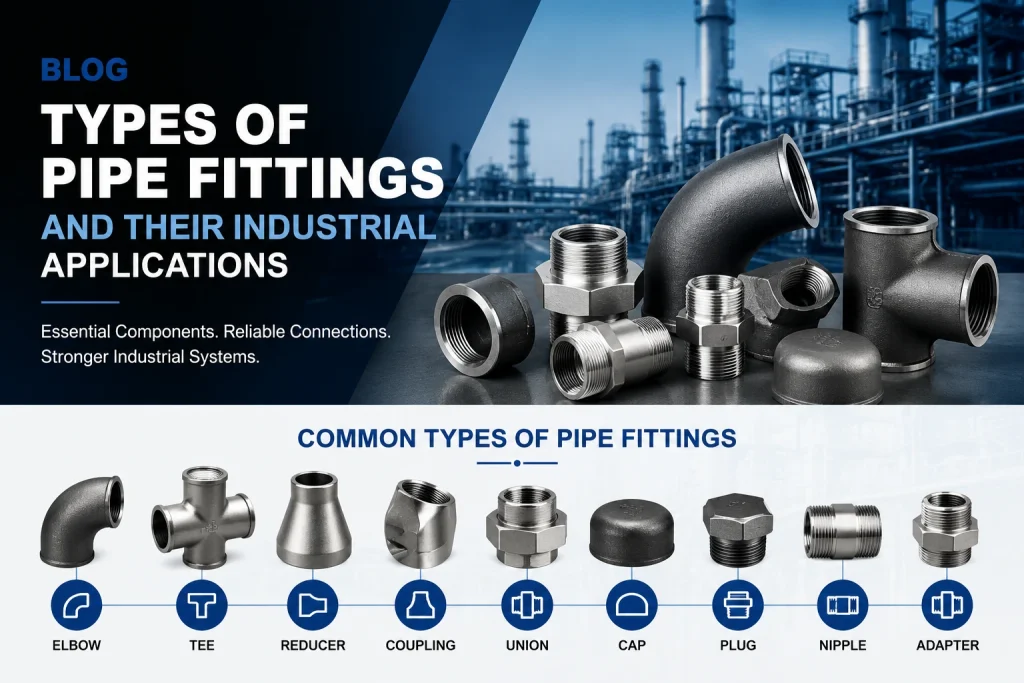
1. Elbow Fittings
Elbows change the direction of flow within a piping system.
The most common configurations include:
- 45° Elbow
- 90° Elbow
- 180° Return Bend
These fittings are widely used where pipelines need to navigate around equipment or structural obstacles.
Applications
- Oil & Gas
- Chemical Plants
- HVAC Systems
- Water Treatment Plants
2. Tee Fittings
Tee fittings create branch connections by splitting or combining the flow.
Common types include:
- Equal Tee
- Reducing Tee
These fittings are commonly installed where multiple process lines intersect.
3. Reducer Fittings
Reducers connect pipes of different diameters.
The two primary designs are:
- Concentric Reducer
- Eccentric Reducer
Reducers help maintain proper flow velocity and pressure while connecting pipelines of varying sizes.
4. Couplings
Couplings connect two straight sections of pipe.
They are frequently used during repairs, maintenance work, and pipeline extensions.
Benefits include:
- Easy installation
- Secure connection
- Reduced downtime
5. Union Fittings
Unlike couplings, unions can be disconnected without cutting the pipe.
They are ideal for systems requiring regular maintenance or equipment replacement.
6. Caps
Pipe caps seal the end of a pipeline.
They are commonly installed during pressure testing, future expansion planning, or permanent pipeline termination.
7. Plugs
Plugs close threaded pipe openings.
They are generally used in maintenance applications and temporary pipeline isolation.
8. Nipples
A nipple is a short length of threaded pipe used to connect fittings, valves, or equipment.
Different thread configurations make nipples suitable for a variety of industrial systems.
9. Adapters
Adapters connect pipes with different connection types or thread standards.
They simplify the integration of various piping components without replacing the entire system.
10. Cross Fittings
Cross fittings allow four pipeline connections at a single point. Although less common than tees, they are useful in specialized industrial installations.
Common Materials Used for Industrial Pipe Fittings
Selecting the correct material is just as important as choosing the fitting type.
Carbon Steel
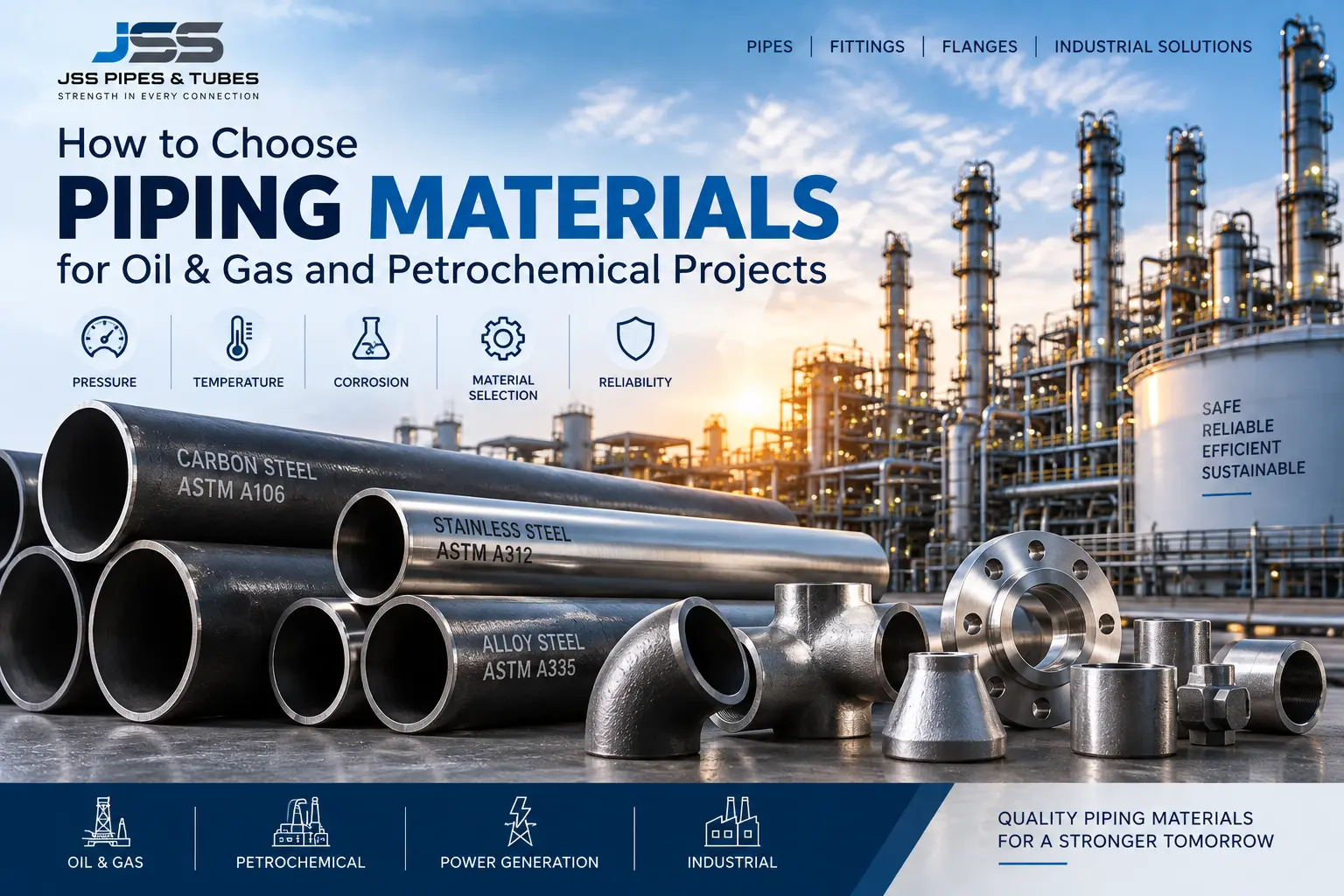
Carbon steel fittings offer high strength and are commonly used in oil & gas, power generation, and heavy industrial applications.
Stainless Steel
Stainless steel fittings provide excellent corrosion resistance, making them ideal for chemical processing, marine environments, food processing, and pharmaceutical industries.
Many industries rely on trusted SS Fittings Suppliers UAE for durable stainless steel piping solutions in corrosive environments.
Alloy Steel
Alloy steel fittings perform well under high temperatures and high-pressure conditions.
Brass
Brass fittings are commonly used in plumbing systems, compressed air lines, and low-pressure industrial applications.
PVC
PVC fittings are lightweight, corrosion-resistant, and suitable for water distribution and drainage systems.
Where Are Pipe Fittings Used?
Pipe fittings are essential across numerous industries.
Oil & Gas
Used in upstream, midstream, and downstream operations for transporting crude oil, natural gas, and refined products.
Petrochemical Plants
Support complex process piping systems that transport chemicals under high pressure and temperature.
Marine Industry
Installed in shipbuilding, offshore platforms, and seawater handling systems.
Water Treatment Plants
Used in filtration systems, pumping stations, and distribution networks.
Power Generation
Support steam, cooling water, and process pipelines in thermal and renewable power plants.
Construction
Used in commercial buildings, industrial facilities, and infrastructure projects.
How to Choose the Right Pipe Fitting
Selecting the correct fitting depends on several technical factors.
Consider:
Operating Pressure
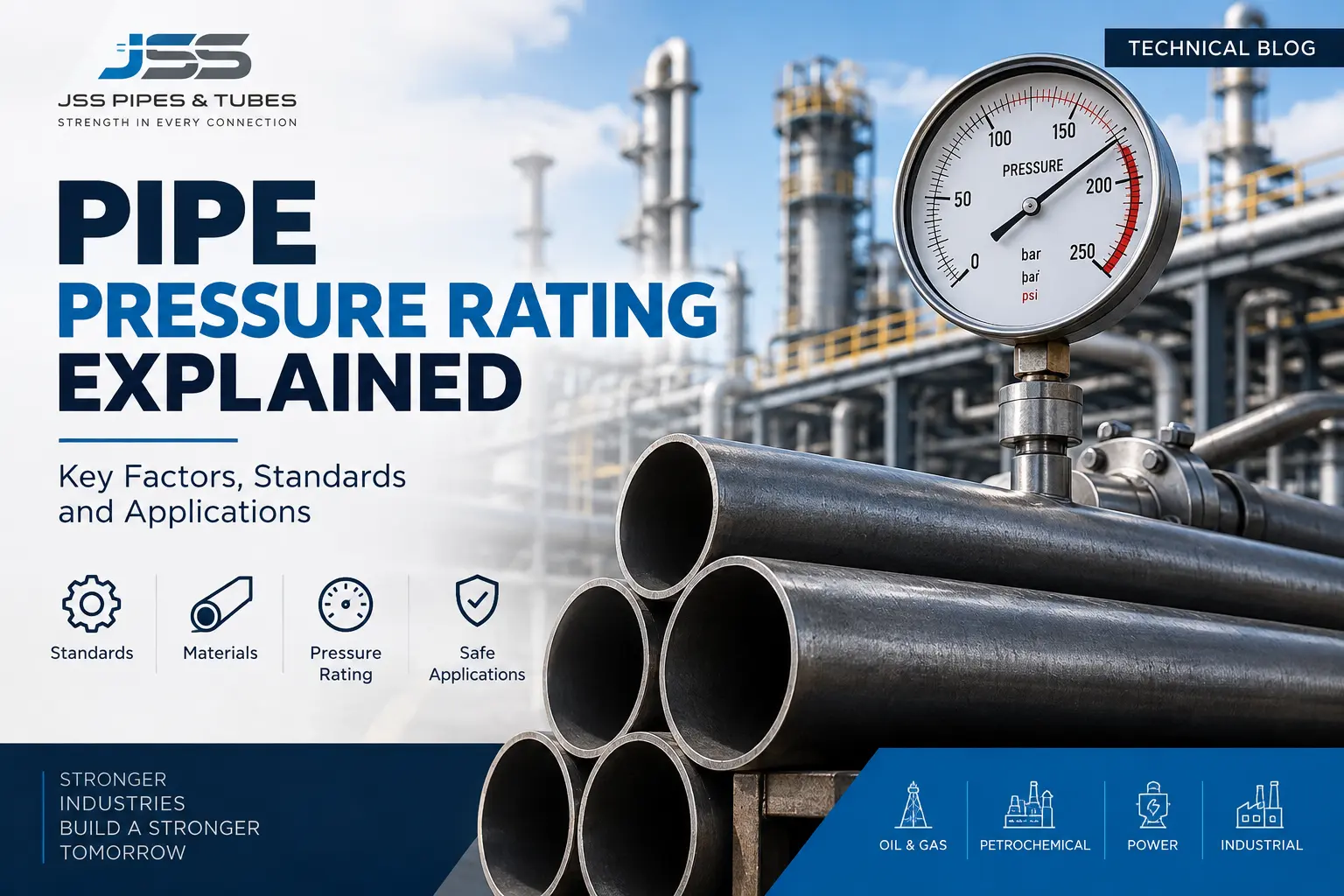
Ensure the fitting meets the required pressure rating.
Operating Temperature
Different materials perform differently under elevated temperatures.
Fluid Type
Corrosive chemicals require corrosion-resistant materials such as stainless steel.
Pipe Size
Always match the fitting dimensions with the connected pipeline.
Connection Type
Choose between butt weld, socket weld, threaded, grooved, or flanged connections based on the application.
Industry Standards
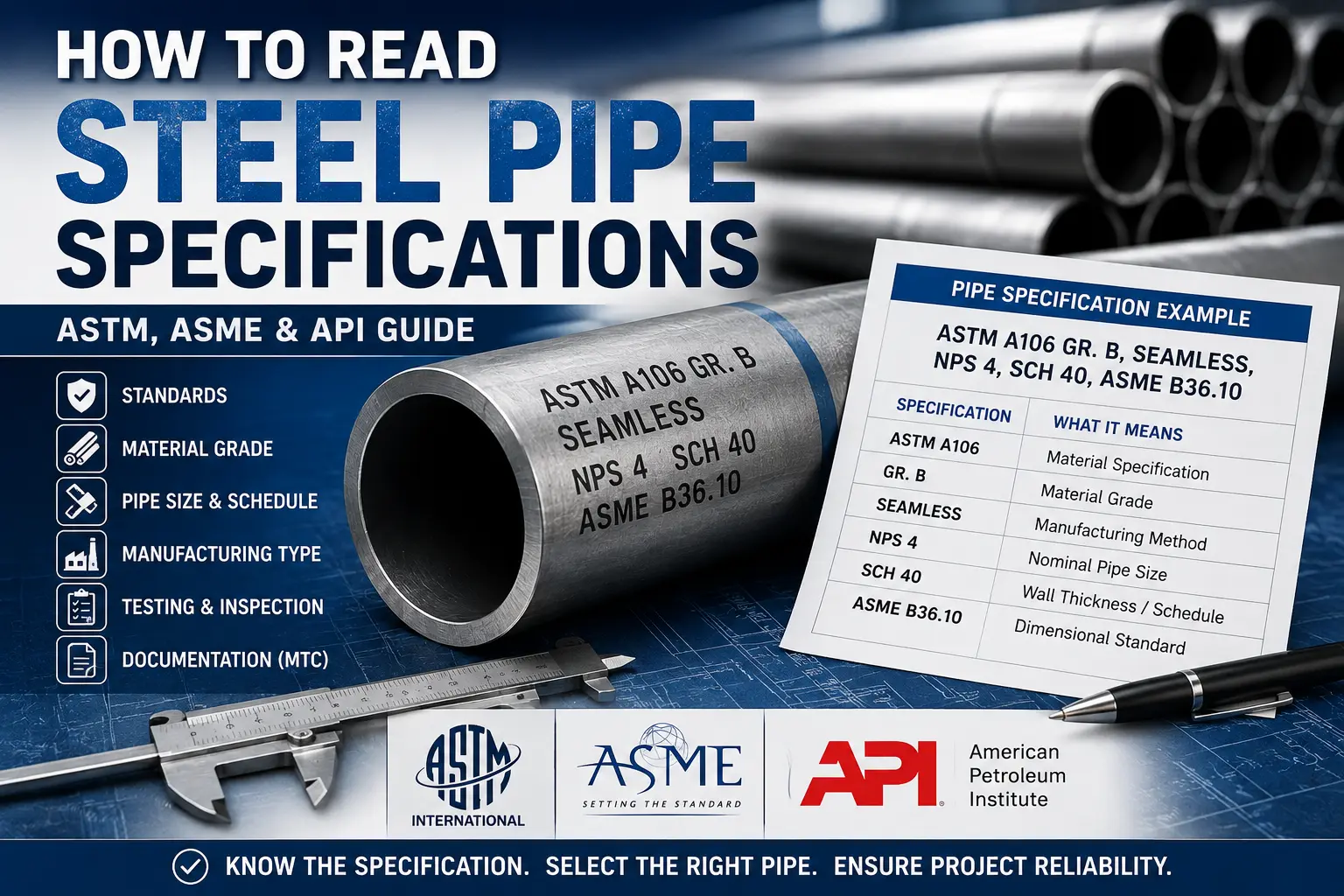
Industrial fittings should comply with internationally recognized standards such as ASTM, ASME, and ANSI.
Common Mistakes to Avoid When Selecting Pipe Fittings
Avoid these common errors –
- Choosing the wrong material
- Ignoring pressure ratings
- Overlooking corrosion resistance
- Using incompatible connection types
- Selecting fittings from unreliable suppliers
- Ignoring industry standards
Proper planning reduces maintenance costs and improves system reliability.
Why Quality Pipe Fittings Make a Difference
Industrial piping systems operate under demanding conditions where reliability is critical. High-quality fittings reduce leakage, improve flow efficiency, simplify maintenance, and increase the overall lifespan of the system.
When paired with high-performance piping from trusted Carbon Steel Pipe Suppliers UAE, compatible fittings help create a safer and more efficient piping network capable of handling demanding industrial operations.
Conclusion
Pipe fittings are essential components that ensure industrial piping systems operate safely, efficiently, and reliably. From elbows and tees to reducers, unions, and adapters, each fitting serves a specific purpose in directing flow, connecting pipelines, and maintaining system integrity.
Choosing the correct fitting involves evaluating factors such as pressure, temperature, material compatibility, and industry standards. Working with experienced suppliers and using high-quality fittings can significantly improve system performance while reducing long-term maintenance costs.
Whether you’re designing a new industrial facility or upgrading an existing pipeline, understanding the different types of pipe fittings will help you build a durable and efficient piping system.
Working with an experienced pipe supplier in UAE ensures access to high-quality pipes, fittings, flanges, and related piping components required for industrial, EPC, and infrastructure projects.
Frequently Asked Questions
Q1. What are the most common types of pipe fittings?
Ans – The most commonly used pipe fittings include elbows, tees, reducers, couplings, unions, caps, plugs, nipples, adapters, and cross fittings. Each fitting performs a specific function within an industrial piping system.
Q2. Which material is best for industrial pipe fittings?
Ans – The ideal material depends on the application. Carbon steel is preferred for high-strength industrial systems, while stainless steel offers superior corrosion resistance for chemical, marine, and food processing industries.
Q3. Where are industrial pipe fittings commonly used?
Ans – Industrial pipe fittings are widely used in oil & gas, petrochemical plants, water treatment facilities, power generation, marine projects, manufacturing industries, and commercial construction.
Q4. How do I choose the right pipe fitting?
Ans – Consider operating pressure, temperature, fluid type, pipe size, connection method, material compatibility, and compliance with ASTM and ASME standards before selecting a fitting.
Q5. What is the difference between a coupling and a union?
Ans – A coupling permanently joins two pipe sections, whereas a union can be easily disconnected without cutting the pipe, making maintenance and equipment replacement much simpler.
Q6. Why are stainless steel pipe fittings preferred in corrosive environments?
Ans – Stainless steel pipe fittings offer excellent resistance to rust, chemicals, moisture, and high temperatures, making them suitable for marine, chemical processing, pharmaceutical, and food-grade applications.
Q7. Are pipe fittings available in different pressure ratings?
Ans – Yes. Industrial pipe fittings are manufactured in various pressure classes and schedules to suit different operating conditions. Selecting the correct pressure rating is essential for safe and reliable system performance.
Q8. Which industries use the highest number of pipe fittings?
Ans – Oil & gas, petrochemical, power generation, marine, water treatment, manufacturing, HVAC, and infrastructure projects are among the largest users of industrial pipe fittings.